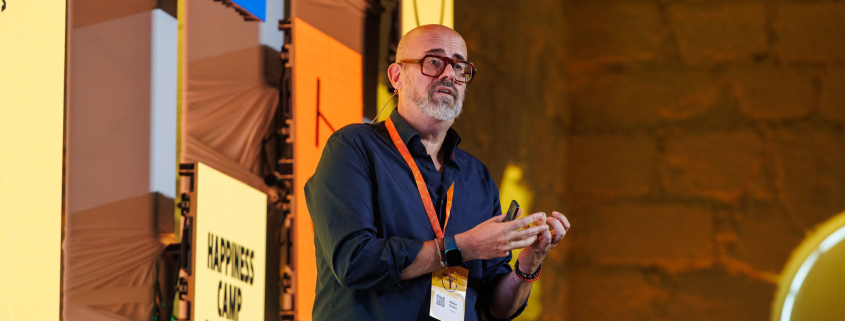
Walter Susini built a career spanning more than three decades in global companies, including serving as Vice President of Marketing at Coca-Cola, where he was behind the iconic slogan “Open Happiness.” In 2023, he joined Happiness Camp as a speaker, bringing a sharp and uncompromising perspective on organisational dynamics.

More recently, Walter published BULLSH*T INC., a book that challenges how we think about leadership, power and culture inside companies. In this conversation with António Pedro Pinto, Founder and CEO of Happiness Camp, Walter unpacks what genuine culture looks like, how organisational theatre erodes performance and when leadership turns into corporate illusion.


In your experience, what signals reveal that culture is genuine rather than just a well-designed narrative?

Genuine culture isn’t what a company declares. It’s what it tolerates when no one is watching.

Culture becomes real when a mistake is analysed publicly without a witch hunt. When a director can say “I was wrong” without being punished for it. When a top performer’s bonus is affected because he destroyed the team. When a brilliant but toxic talent is invited to leave. When a failed strategy is reviewed before it is reframed as a “learning narrative.”

Genuine culture appears when a company sacrifices short term results to protect coherence. When it says no to a profitable deal because it violates its principles. When it protects someone who raised a problem instead of protecting the person who created it.

Real culture lives in incentives, fears and rewards, not in slogans or values written on walls.

Corporate culture, very often, is a well rehearsed theatre piece performed for investors, candidates and the press. The true culture is the invisible system of incentives, fears and rewards.

If you want a brutal test, look at three things:

Who gets promoted.
Who gets protected.
Who gets silenced.

If behaviour contradicts declared values without consequence, what exists is theatre, not culture.

If those who speak the truth lose space, the culture is fear. If toxic high performers rise quickly, the culture is cynicism. If those who protect their teams are seen as naïve, the culture is politics.

How does organisational theatre compromise psychological safety and long-term performance?

Organisational theatre creates the illusion of alignment while removing real dialogue.

It begins when people understand that the most important performance is no longer the market performance. It is the meeting performance.

Everyone starts acting. The director performs confidence. The CEO performs vision. Nobody performs doubt.

Psychological safety disappears when disagreement carries risk. When an honest question is seen as a political threat, people stop solving problems and start performing competence.

In the short term, it works. PowerPoint looks coherent internally. But the market does not watch the theatre. It responds to reality.

Companies do not die because they lack talent. They die because intelligent people learn that staying silent is safer than speaking up.

When does leadership stop being strategic vision and become organisational bullsh*t?

Leadership becomes bullsh*t when vision is no longer tested against reality.

Strategy requires hard choices and trade offs. Bullsh*t replaces decisions with slogans.

If everything is a priority, there is no strategy. If everything is win win, conflict is being avoided. If the plan never admits risk, it is corporate fantasy.

The shift happens when leaders start selling optimism instead of confronting trade offs. When the discourse becomes more sophisticated than the results.

Bullsh*t begins when the leader prefers to be admired rather than challenged.

Real leadership accepts tension and challenge. Bullsh*t seeks applause and admiration.


Walter Susini’s reflections are not comfortable, and that is precisely the point. His work invites leaders to examine the gap between declared values and lived behaviour, between performance and integrity.

Understanding that gap may be the first step in closing it.

His book, BULLSH*T INC., is available here: https://www.amazon.com/BULLSH-INC-Unfiltered-Survival-Corporate-ebook/dp/B0G6FF4BN3
When we wrote The Reset Manifesto, it was not an abstract reflection on work culture. It was a response to a structural shift in the way work operates globally.

Across industries and geographies, expectations continue to accelerate. Performance cycles tighten. Digital connectivity dissolves the boundaries that once separated effort from recovery. What began as temporary intensity has become permanent pressure.

Burnout is no longer a side effect. It is embedded in the system.

The Manifesto made a clear statement: ambition and human sustainability cannot be treated as competing forces. Performance detached from human capacity ultimately weakens the very organisations it claims to strengthen.

But a manifesto alone is not enough.

Taking the Conversation Beyond Borders

After activating The Reset in Porto, we understood something important. If the future of work is a global issue, then the conversation cannot remain local.

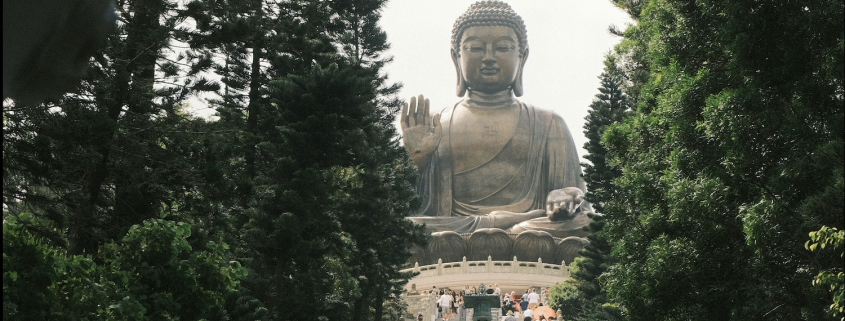
This week, The Reset reached Hong Kong.

Not as a symbolic extension. Not as visual spectacle. But as a deliberate decision to bring the conversation into public space in a different cultural and economic context.

Posters appeared in the streets. Messages questioning burnout and blind ambition interrupted the rhythm of daily life. People paused. Some engaged immediately. Others reflected quietly. All reactions were real.

And that reality matters.

Because the pressures shaping work in Europe are not isolated from those shaping work in Asia. Different markets. Different systems. Similar patterns of intensity, acceleration and performance without recovery.

The Reset does not belong to one city. It responds to a global condition.

From Statement to Shared Responsibility

Taking The Reset into Hong Kong was not about visibility. It was about accountability.

If we claim that work must become more human, that claim must withstand scrutiny across cultures and economies. If we argue that current performance models are unsustainable, we must be willing to question them publicly, not only within institutional walls.

The model that normalises chronic depletion is not only harmful to people. It is unsustainable for business.

Organisations cannot sustain innovation, creativity or resilience when the people inside them operate in a state of continuous exhaustion. Human sustainability is not an ethical add on. It is a strategic necessity.

By bringing The Reset into the streets of Hong Kong, we move from regional activation to global participation. We recognise that reshaping work requires collective reflection, not isolated statements.

A Movement in Motion

Porto was the beginning of this activation. Hong Kong confirms its direction.

City by city, the conversation expands. Not to export a message, but to invite dialogue. To listen as much as we provoke. To recognise that the future of work must be shaped collaboratively across borders.

From Manifesto to movement.
From idea to action.
From local activation to global responsibility.

The Reset is no longer confined to one geography.

It is in motion.

Where should it go next?

We wrote a manifesto because something fundamental in the way we work has shifted, and not in a healthy direction.

Across industries and continents, expectations have accelerated. Performance cycles have shortened. Digital connectivity has removed the natural boundaries that once separated work from recovery. What was initially framed as agility gradually became permanence. What was temporary pressure became structural intensity.

Burnout is no longer a side effect. It is increasingly part of the system.

This is the tension that led to The Reset Manifesto. A clear position that ambition and human sustainability cannot continue to be treated as competing forces. A recognition that performance detached from human capacity eventually weakens the very organisations it aims to strengthen.

But publishing a manifesto is only the beginning.

For years, conversations about human sustainability have taken place in conferences, leadership forums and internal strategy sessions. These discussions matter. They clarify thinking and build alignment.

However, the future of work will not change inside rooms alone. If the conversation is to be credible, it must move beyond institutional spaces and meet people where work is experienced daily.

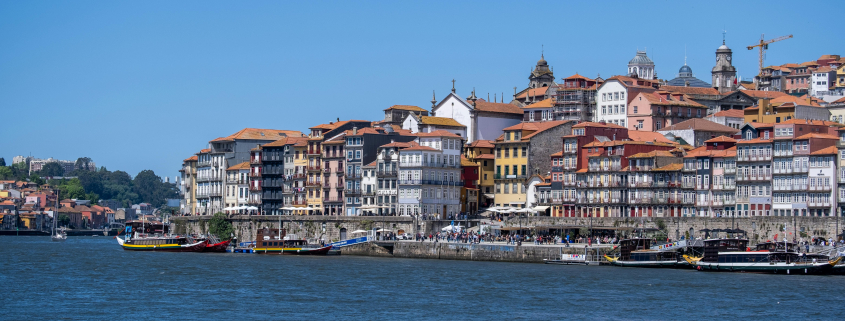
This week, The Reset moved into the streets of Porto.

Not as a symbolic gesture, and not as visual spectacle, but as a deliberate decision to place the conversation in public space. Posters questioning burnout appeared on city walls. Messages challenging the way we measure success invited reflection. Conversations about leadership, pressure and ambition unfolded between strangers who had never met before.

The reactions were honest. Some were immediate. Others were cautious. A few were uncomfortable. All of them were real.

And that reality matters.

Porto has long been home to Happiness Camp. It is where thousands of leaders and professionals gathered to question traditional models of performance and well being. It is where the idea of human sustainability gained momentum.

Choosing Porto as the first city for this activation was intentional. It connects the origins of our work with its next evolution. It signals that The Reset is not a separate initiative layered on top of previous efforts. It is a continuation, deepened and expanded.

Porto was the first step. It will not be the last.

Taking The Reset into public space was not about visibility. It was about responsibility.

If we claim that work needs to become more human, that claim must withstand public scrutiny. If we argue that current performance models are unsustainable, we must be willing to question them openly.

That model is not only harmful to people. It is unsustainable for business.

Organisations cannot sustain innovation, creativity or resilience when the people inside them operate in a state of chronic depletion. Human sustainability is not an ethical add on. It is a strategic necessity.

By bringing The Reset into the streets, we move from position to participation. We invite dialogue rather than deliver conclusions. We recognise that reshaping work requires collective reflection, not isolated statements.

The Reset was never intended to remain in one place. Porto marks the beginning of a broader movement that will travel city by city, engaging communities where they live and work.

This is not about exporting a message. It is about listening, provoking thoughtful debate and recognising that the future of work must be shaped collaboratively.

From manifesto to movement.
From idea to action.
From reflection to responsibility.

The Reset is now in motion.

Porto was first.

Where should we go next?

For a long time, we accepted things that should never have felt normal.

We accepted exhaustion as the price of ambition.
We accepted speed over meaning.
We accepted that success might come at the cost of ourselves.

At Happiness Camp, we’ve spent years listening to these stories. In conversations with leaders, teams and professionals across industries and geographies, the same tension kept surfacing: work was delivering results, but draining the people behind them.

Burnout became normalised. Hustle was glorified. And the human cost of work quietly faded into the background.

At some point, it became impossible to ignore a simple truth.

The way we work needs to change.

Why a Manifesto

The Reset is not just a reflection.
It is a position.

The Reset Manifesto exists because incremental change is no longer enough. Because fixing individuals without questioning systems only postpones the problem. And because the future of work cannot be built on models that no longer serve human lives.

This manifesto is a clear statement about what we believe the future of work should look like. One where ambition and human sustainability are not opposites, and where performance and well-being grow together.

Work should challenge us.
But it should not break us.

From Happiness Camp to a movement

Happiness Camp began as a space for conversation. A place to pause, reflect and imagine better ways of working.

But conversations, on their own, are no longer enough.

What started as a conference has evolved into something larger. A movement that questions how work feels, how it functions and how it evolves over time. The Reset represents that evolution.

This is not about slowing down.
It’s about evolving forward.

About building organisations that are resilient because they are human. About designing cultures where people can perform, grow and stay well.

A call to rethink, together

The Reset Manifesto is an invitation.

An invitation to leaders, creators, teams and dreamers to rethink how we build, lead and work together. To question what we’ve accepted without reflection. And to take responsibility for shaping what comes next.

The future of work won’t be reset by observers.
It will be reset by those willing to step inside the conversation.

The Reset has started.

Watch the Manifesto.
Reflect on it.
And ask yourself:

What needs to change first in the future of work?

For years, the future of work has been a topic of endless discussion.
New tools. New frameworks. New promises of balance, flexibility and purpose.

And yet, across industries and roles, the feeling has been strikingly similar: work has become unsustainable, disconnected and, too often, deeply human in theory but not in practice .

At Happiness Camp, we’ve spent years listening. On stages, in workshops, in private conversations with leaders and teams from around the world. Different contexts, different pressures, but the same patterns repeating themselves.

Burnout became normalised.
Hustle was glorified.
And the human cost of work slowly became acceptable.

At some point, it became clear that talking about change was no longer enough.

Why conversation needed to evolve

The future of work won’t be reset by observers.
It will be reset by those willing to step inside the conversation and take responsibility for shaping what comes next.

That realisation led us here.

The Reset Alliance was created not as another community, network or membership badge, but as a deliberate shift. From watching to participating. From attending to contributing. From conversation to action.

This is not a space to follow from the outside.
It is a collective to belong to.

What The Reset Alliance is

The Reset Alliance is a collective of leaders, thinkers and culture-shapers working alongside Happiness Camp to redefine how work actually feels, functions and evolves.

It exists for people who refuse to accept exhaustion, disengagement and disconnection as “just the way work is”. For those who believe organisations can perform, grow and still protect the people inside them.

Being part of the Alliance means stepping closer. Closer to the thinking behind the movement. Closer to the research, the questions and the conversations that don’t happen on the main stage.

This is where ideas are not only shared, but challenged.
Where wellbeing is not performative, but systemic.
And where responsibility replaces slogans.

From event to ecosystem

Happiness Camp began as Europe’s largest Human Sustainability Conference. Over time, it has evolved into something broader and more intentional.

The Reset Alliance represents that evolution.

It transforms Happiness Camp from a moment in time into an ongoing ecosystem of research, dialogue and influence. One where proximity matters, contribution is expected and impact grows through continuity, not visibility.

This shift recognises a simple truth: real change does not happen in isolation, and it does not happen once a year.

Who leads the Alliance

The Reset Alliance is led by Jen Fisher, Director of Impact & Community at Happiness Camp and one of the most respected global voices in workplace transformation and human sustainability.

Alongside Jen, Alliance members collaborate with global executives, renowned researchers, cultural changemakers and the Happiness Camp Executive Council . People who don’t just speak about change, but build it inside organisations every day.

The Alliance is shaped by those willing to do the work, not just talk about it.

What it means to be part of it

Being part of The Reset Alliance is not about status. It’s about access, proximity and influence.

Members gain early access to original research and insights before they are publicly released. They take part in closed-door webinars and masterclasses with global leaders. They join curated moments designed for real connection, not surface-level networking.

More importantly, they gain a voice.
A real one.

Alliance members help influence the conversations, initiatives and agenda that shape Happiness Camp and the broader dialogue around human sustainability at work.

This is not a passive role.
It is an active responsibility.

Who this is for

The Reset Alliance is for people who care deeply about the human side of work. People who influence culture, people or strategy inside their organisations. People who are curious, generous and willing to challenge the status quo.

You don’t need a specific title.
You need a point of view.
And the willingness to contribute, not just consume.

An invitation

If you believe conversations about work need to go deeper.
If you believe people should matter as much as performance.
If you want a real seat at the table shaping what comes next.

Then The Reset Alliance is for you.

Apply to join The Reset Alliance.

Quality over quantity.
Always.

Quality over quantity.
Always.

The Reset is in motion.