Tag Archive for: happiness

We believe the future of work will be shaped by leaders who understand that wellbeing is not a benefit to be offered, but a foundation that must be built into how organisations function, grow and sustain performance.

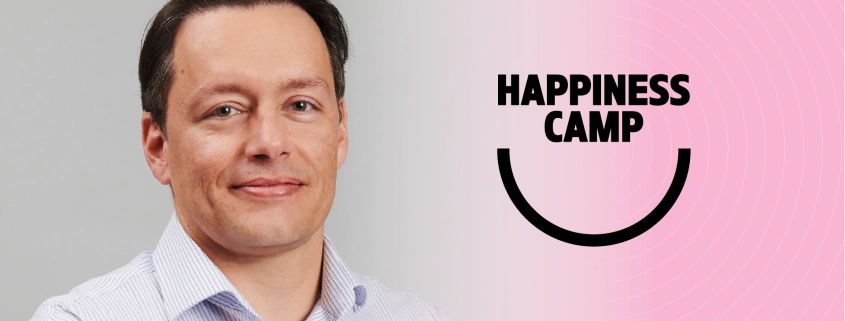
Today, we welcome a voice that brings this belief into practice, at scale and with clarity. César Carvalho, Founder and CEO of Wellhub , joins Happiness Camp 2026 as part of our Executive Council.

César has spent his career removing the barriers that make wellbeing feel optional at work. His work is grounded in a simple but powerful truth: when people break, businesses break. And when people are supported as whole humans, organisations become stronger, healthier and more resilient.

At the heart of his perspective is a clear conviction. Wellbeing isn’t a perk. It’s what allows people to function, grow and live well. And it should never depend on individual resilience alone.

As César shared with us:

“I believe that all companies should be wellbeing companies.”

This belief is not theoretical. It is built into the systems, platforms and choices he has developed to make wellbeing accessible, integrated and part of everyday work life for millions of people.

Who is César?

César is the Founder and CEO of Wellhub, a global workplace wellbeing platform connecting people with accessible tools for physical, mental and emotional health. His work focuses on helping organisations move from intention to action, embedding wellbeing into how work is designed and experienced.

His leadership is shaped by a deep understanding of human sustainability and by personal experience. Becoming a parent reinforced what he already knew to be true: rigid structures serve no one. Work needs to reflect real life, not compete with it.

In his conversation with us, César shared reflections that are both direct and deeply human:

•⁠ ⁠The part of work culture he would cancel forever: glorifying burnout as a badge of honour for leadership
•⁠ ⁠The moments he feels most human in his work: when work mirrors real life and allows people to show up as they are
•⁠ ⁠The wellbeing practices that keep him grounded: rest, movement and reset moments

These reflections point to a necessary shift. Sustainable success does not come from pushing harder. It comes from designing work that supports people before they reach their limits.

What to expect at HC 2026?

César joins a growing group of global leaders who are challenging outdated models of performance and redefining what success looks like in modern organisations.

His presence strengthens our collective commitment to human sustainability, reminding us that wellbeing is not an individual responsibility. It is a systemic one.

More voices will be joining the Executive Council in the coming months. Each one bringing a perspective that pushes the conversation forward.

For now, one thing is clear.

Happiness Camp 2026 just became more grounded, more honest and more focused on what truly sustains work and life.

Welcome, César.
The Reset is in motion.
And you are an essential part of it.
In fast-moving creative and tech environments, speed is often celebrated as strength. Endurance is praised. Pushing through becomes a quiet badge of honor.

But here’s what I’ve learned the hard way: staying human isn’t what slows leaders down – It’s what helps leaders sustain themselves – and their teams.

When work moves fast, emotions don’t disappear. They go underground. And when emotions go unnamed, they don’t go away – they leak. Into tone. Into tension. Into how safe people feel showing up as themselves.

Most leaders I know care deeply. They want people to feel well, valued, and energized. And yet they’re carrying pressure, expectations, and the weight of constant change. That tension – between care and performance – often stays unspoken.

That’s not a failure of values. It’s a lack of skill.

We talk a lot about emotional intelligence. Awareness matters. But awareness alone doesn’t help in moments of stress. What leaders need is emotional fluency – the ability to name what’s happening, regulate themselves, and respond with clarity instead of armor.

What we can name, we can navigate.
What we can’t name tends to run the room.

Staying human at work doesn’t mean oversharing or lowering the bar. It means creating conditions where people can do hard things without losing themselves. It means leaders naming the moment before trying to fix it. Holding hope and honesty at the same time. Treating leadership not as distance or power, but as service and connection.

People don’t burn out because work is challenging. They burn out when it’s challenging and lonely. When they don’t feel seen. When they believe being human is a risk.

Cultures that stay human don’t move slower.
They move with more trust and more resilience.
More room for joy and flourishing—even under pressure.

The goal isn’t to survive work.
It’s to thrive while doing meaningful things with other humans.

Staying human isn’t a personality trait.
It’s a leadership skill.
And it’s one we can all practice.

We believe the future of work depends on leaders who understand that learning is not about answers, but about awareness, courage and conscious growth.

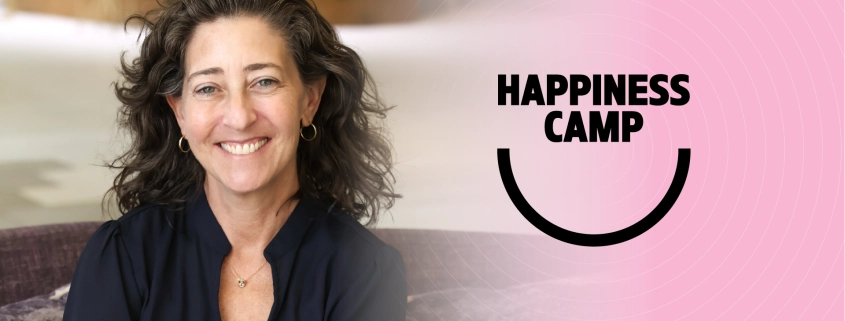
Today, we welcome a voice that embodies that belief with clarity and intention. Madalena Carey, CEO at Happiness Business School, joins Happiness Camp 2026 as part of our Executive Council and invited specialists.

Madalena has been shaping a vision that aligns deeply with the movement we are building. One where education is not treated as a transfer of knowledge or a checklist of skills, but as a living process that transforms people, cultures and the way organisations evolve.

At the heart of her work is a simple but powerful idea. Learning should help people reconnect with themselves, question certainty and build cultures that are human at their core.

As she shared with us:

“I co-create people-centred cultures by helping organizations embrace agility, purpose, and real human connection.”

This perspective is not theoretical. It is lived, practiced and deeply embodied in the way Madalena teaches, leads and builds learning spaces.

Who is Madalena?
Madalena leads Happiness Business School, an academy dedicated to human development, leadership and conscious learning. Her work sits at the intersection of education, culture and human sustainability, supporting people and organisations in moments of growth, change and uncertainty.

Her approach is grounded in presence, curiosity and courage. And in challenging one of the most limiting patterns of modern work culture: the illusion that certainty equals safety.

In her conversation with us, Madalena shared reflections that feel both bold and deeply human:
• The part of work culture she would leave behind forever: certainty disguised as security
• The mindset that guides her in moments of doubt: choosing movement over waiting
The moments she feels most human in her work: learning environments where people feel safe to question, explore and grow

These moments may sound simple. But they point to something essential. Growth does not come from control. It comes from awareness, courage and conscious choice.

What to expect at HC 2026?
Madalena joins a global group of leaders who are redefining how organisations think about learning, leadership and human sustainability. Together, they are shaping conversations about the future of work that are honest, challenging and deeply human.

More global voices will join the Executive Council soon, and we will be sharing them in the coming months.

For now, one thing is clear.

Happiness Camp 2026 just became more curious, more courageous and more intentional.

A reminder that growth rarely lives in certainty.
And one the future of work can no longer afford to ignore.

Welcome, Madalena.
The Reset is in motion.
And you are an essential part of it.

Global expert in workplace wellbeing to lead the international impact strategy and ambassador programme of Europe’s largest Human Sustainability conference

Happiness Camp, Europe’s leading conference dedicated to human sustainability and the future of work, officially announces its return in 2026 and introduces its new Director of Impact & Community: Jen Fisher.

Internationally recognised as one of the foremost experts in workplace wellbeing, Jen Fisher is a strategic advisor and author of Hope Is the Strategy. In her new role, she will lead Happiness Camp’s global impact strategy, strengthen the event’s international community, and oversee the creation of transformative initiatives such as the Ambassador Programme and the Happiness Camp Awards — distinctions that will celebrate organisations redefining how they care for their people’s wellbeing.

“I’m truly excited to be joining Happiness Camp in this role,” says Jen Fisher. “Workplace wellbeing is no longer a nice-to-have; it’s a critical driver of organisational success and human prosperity. Happiness Camp is now the meeting point for the most innovative minds and visionary companies in this space, and I’m committed to amplifying its impact through strategic partnerships and meaningful community engagement.”

The 2026 edition marks a new chapter in the event’s history. Under the theme “The Reset”, Happiness Camp will bring together between 15,000 and 20,000 professionals from Europe, the United States, Brazil, and beyond on 24 September 2026, in Porto.

For one day, business leaders, HR professionals, culture experts, academics, entrepreneurs, and creators will come together to share ideas, present case studies, and explore new people-centred approaches to the future of work.

“Jen’s appointment represents a defining step in the evolution of Happiness Camp,” says António Pedro Pinto, CEO & Co-Founder of Happiness Camp. “Her expertise and strategic vision, combined with a global network of thought leaders, will elevate both the scale and impact of the event — positioning Portugal as one of the world’s leading stages for the discussion of the future of work and human sustainability.”

Before taking on this role, Jen Fisher served as Deloitte’s first Chief Wellbeing Officer in the United States. She is currently the CEO of The Wellbeing Team, host of the acclaimed WorkWell Podcast, and works with organisations around the world to design wellbeing strategies that unite business performance with human flourishing.

Happiness is at the core of human existence.
Pursuing happiness considerably shapes our lives: our decisions, relationships, and even careers.

What do you need to be happy?
This is an apparently easy and simple to tackle question. Or is it?

A core aspect of happiness is the perception of control over our circumstances.
We may not have complete control over what happens to us, but we do in how we respond. So, a core feature of happiness is the skills we develop that enable us to respond adequately to life events.

Do you want to be happy?
Before you buy your next “Top 10 Tips for Happiness book”, consider investing in your PACE profile skills:
 Problem-solving: adds resourcefulness, making you feel competent and capable in managing challenges
 Adaptability: adds flexibility and resilience, resulting in greater emotional robustness
 Creativity: gives you a sense of agency and freedom over your life
 Empathy: enhances your self-knowledge and your connection to others

PACE profile skills will strengthen your resilience, purpose, and mindset, providing a strong foundation for happiness (and success). At Next Level Corporate, we do this by developing insightful and engaging training programs for teams and corporations, enhancing their development.

Remember: invest in your skills because happiness is not given; it is nurtured.
A happy ship, just like a happy life, requires a robust structure, a clear vision, and a cohesive crew to navigate the winds, waves, and currents.

Celso Costa
Founder and CEO of Next Level Corporate

In all organizations, the role of the leader is fundamental to the success of the team and the overall performance of the company. Great leaders possess unique qualities and characteristics that set them apart, allowing them to inspire and guide their teams to achieve extraordinary results. By understanding these qualities, aspiring leaders can learn to become exceptional leaders and create excellent workplaces and successful companies.

7 unique qualities and characteristics from Great leaders

  1. Empowerment and Trust
  2. Effective Communication
  3. Clear Goals and Expectations
  4. Opportunities for Growth
  5. Promoting a Positive Work Culture
  6. Encouraging Innovation and Risk-Taking
  7. Proactively Addressing Conflicts and Challenges

In conclusion, great leaders possess a unique blend of emotional intelligence, communication skills, action-oriented capabilities, and a growth mindset. Becoming a great leader is a journey that requires continuous learning and self-improvement. By understanding the characteristics and practices that distinguish good leaders, individuals can pave the way for successful leadership and make a lasting impact on their teams and organizations. So, start your journey to becoming an exceptional leader today! Listen to your people and assess where you are on your path to becoming a “Great Leader”.

Sandra Coelho
Product Specialist

The gathering of more than 6,000 people at the Alfândega do Porto for another edition of the Happiness Camp is just the prelude to observing this transformation in the world of work, which is gaining more relevance every day.

Since millions of people around the globe and across all business sectors discovered remote work, companies have been striving to maintain their appeal. It’s not just about salary or emotional compensation; the goal is to genuinely create a culture of well-being and happiness that makes people want to be part of the team. Because employees are people, and people need and deserve to be happy, these are very welcome paradigm shifts.

Sports continue to be one of the most effective active Human Resources policies created for the well-being and inclusion of teams. In this particular aspect, Urban Sports Club’s offering is unparalleled, as it allows everyone to enjoy this benefit in a way that suits them, according to their preferences, wherever it is most convenient. Whether it’s yoga near their children’s school, padel close to the office, or a gym even when traveling for work, everyone finds what they’re looking for with a single company subscription.

However, some are transforming the way companies discover this “market of happiness, and that is the mission of Happiness Camp, with which we are immensely proud to be associated.

Mental health heavily impacts overall well-being and workplace productivity. According to the World Health Organization (WHO), depression and anxiety cost the global economy an estimated $1 trillion per year in lost productivity.

When employees face mental health challenges, it can lead to negative consequences for your business. For example, anxiety and stress can bring reduced concentration, increased absenteeism, and higher turnover.

That’s why proactively addressing mental health needs can generate substantial benefits for both your people and your organization. Employees with mental health support are more likely to stay focused, motivated, and happy. This translates to productive workforce and better performance for a business.

Preventive mental health care also helps avoid costly treatments and reduces overall healthcare expenses. That’s why at Remote, we offer Global Mental Health benefits in 83 countries in partnership with Oliva. Available to employers using our employer of record (EOR) services, this mental health benefit can increase your team’s happiness and productivity.

A supportive workplace culture that prioritizes mental health strengthens your company’s reputation, making it a more appealing place to work for top talent. If you want to start providing mental health benefits for your employees, chat with Remote today.

——————————————————-

Prioritizing mental health in the workplace is not just a compassionate choice, but a strategic one. You can build a happier and more productive team by proactively addressing mental health.

Ready to boost your team’s well-being and performance? Check out why mental health is so important, and how Remote offers mental health benefits to global employees.

INSTAX Biz app is a powerful tool designed to build meaningful customer engagement while boosting brand awareness. Thus, make your business memorable by providing your audience with custom branded instax photos that they can keep and treasure.

Snap your customer’s photo, print it via an instax Link™ smartphone printer and offer a customized branded instax photo and a positive experience from your brand.

And…if you want to make a lasting impression on your customers, instax is the way to go. In a world that is increasingly fast-paced, tangible instant photos can leave a genuine positive impact that lasts long after the event, workshop, or festival is over.

With this user-friendly and simple app, what one need to do is upload a unique template to the app, and we are ready to go! We can even add a dynamic QR code or memorable date to improve customer experience.

Thus, instax photos and sport events are the perfect team, once every fan loves a memento featuring their club logo or even favourite player.

Instax Biz app is the perfect tool for wedding ceremonies, product launches, conferences and anniversary or birthday parties, by creating a dedicated template you can snap an image of your visitor or guest and hand over a custom branded instax print to take home and cherish. You can even add the date and venue to the template or include the QR code that links to a URL of your choice.

The relationship between physical fitness and cognitive functions such as focus and creativity at work has been a subject of increasing interest. Various studies have explored how different forms of physical and mental exercises can enhance these cognitive abilities, thereby improving work productivity and creative output. These studies suggest that physical exercise can enhance workplace creativity, though the effects may vary based on exercise intensity, individual differences, and other environmental factors.

Exercise improves cognition by inducing long-term changes in the hippocampus: (increasing volume and rate of neural formation), is associated with lower levels of depression and anxiety because of the release of endorphins and endocannabinoids which can last for some time after exercising and promotes the oxygenation of the brain. Ey another thing: when you make pause and exercise you will return to the work with more awareness and focus, yes?

Here some pieces of the puzzle: 

  • Meditation significantly improves creative performance and emotional regulation compared to relaxation training; 1
  • Physical Exercise enhances creativity thinking independently of mood improvements; 2
  • Aerobic fitness improves cognitive functions, including attention and information processing, which can enhance task performance and creativity; 3
  • Attention-broadening training programs, particularly in team sports, significantly improve creative performance, especially in complex tasks; 4
  • Exercise self-control can increase creativity by improving promotion focus, which mediates the relationship between self-control and creative performance; 5
  • There is a significant relationship between concentration levels, physical fitness, and work productivity, indication that better concentration and fitness lead to higher productivity; 6
  • Designing workdays to alternate between cognitively challenging tasks and “mindless” work can help overworked professionals enhance their creativity.  7

So, now you just need to make the puzzle and its easy:

  • Choose a variety of physical activities: strength training, cardio, flexibility, mobility, mind and body, speed, team sports, individual sports, water sports, etc;
  • Start doing first the one’s that you love and make you smile more;
  • If you need help search a professional for the best prescription;
  • Consult your doctor to know if you can start good! 

Meditation, physical exercise, and attention-broadening activities improve creative and focus performance and others cognitive functions. Additionally, a supportive work environment and strategic workday design can further enhance creativity and reduce job stress, leading to improved job performance and productivity.

We are designed to move so, move to a happy world!

By: Marco Moutinho, Sports Director at Jerónimo Martins

1 https://behavioralandbrainfunctions.biomedcentral.com/articles/10.1186/1744-9081-10-9 

2 https://bjsm.bmj.com/content/31/3/240 

3 https://onlinelibrary.wiley.com/doi/10.1002/cphy.c110063 

4 https://www.tandfonline.com/doi/abs/10.1080/10400410701397420 

5 https://www.sciencedirect.com/science/article/abs/pii/S1871187114000340?via%3Dihub 

6 https://www.jbiomedkes.org/index.php/jbk/article/view/272 

7 https://pubsonline.informs.org/doi/10.1287/orsc.1060.0193